Diligence: Background, Track Record & References
This section is written for people who want to go beyond the usual bio and do real diligence on me as a founder.
It is password-protected deliberately. The goal here is not marketing. It’s to give potential investors, partners, and senior hires a candid, fact-based view of:
1. The sequence of my career
2. What has gone well (including proof points)
3. What has not gone so well
4. Who you can speak to if you want independent views
I’ve been building companies for over 25 years. Across four ventures, multiple cycles, and several countries, I’ve had external investors in every single business, and I continue to have positive working relationships with all of them.
What follows is the story, stage by stage.
Early Life & Education
I was born in New Delhi into a family that can trace its lineage back several generations. My family descends from Sir Sobha Singh, who was among the largest landowners in North India and, at the time of India’s independence, part of what would have been considered one of the top families in the country.
It sounds glamorous, but the reality was more nuanced: the family was asset-rich and cash-poor. There was great history and land, but not a great deal of liquidity. It was a useful early lesson in how paper wealth and usable capital are not the same thing.
School & University
- School – Modern School, New Delhi
I attended Modern School, New Delhi, one of the city’s most prestigious schools. The extended family were on the Board of Trustees and involved in its governance, which certainly helped me gain admission, but it was also a genuinely competitive and demanding environment. - Undergraduate – St. Stephen’s College, New Delhi
I then studied at St. Stephen’s College, which has traditionally had an acceptance rate even tighter than many elite Western universities. I graduated with a BA (Hons) with Distinction. St. Stephen’s shaped a lot of my early thinking around debate, argument and intellectual discipline. - Further Study – UC Berkeley Extension
After St. Stephen’s, I spent about a year in the Bay Area, attending UC Berkeley Extension where I completed an Advanced Diploma in Marketing Applications.
This is where I first studied:
- Marketing and sales
- Customer acquisition
- Business execution
It was my first formal immersion in the mechanics of how businesses actually attract and retain customers. Those concepts have been at the core of everything I’ve done since.
Early Work & Early Hustles
On returning to India, family connections arranged what looked like the perfect first job: working for a sports syndication company run by one of India’s most prominent sportsmen. Thanks to introductions, I basically waltzed into the role.
I lasted 14 days.
It became painfully clear that I was not wired to work for someone else in a traditional corporate hierarchy. That short experience, while slightly embarrassing at the time, was extremely clarifying.
Even earlier, at university, I’d already been dabbling in small entrepreneurial experiments:
“MTV on Tape” – a (blatantly illegal) pirate audio cassette “brand” where I:
- Created master mixes of the latest music
- Designed and printed covers
- Produced and sold tapes around campus
GM Promo – a small events and promotions outfit:
- Organising events and early brand activations
- My first taste of practical marketing and operations
Those scrappy, semi-legal university ventures, combined with the 14-day “corporate career”, made it obvious: I was going to build companies, not climb ladders.
Candid Marketing – First Company, First Exit
Building India’s Leading Marketing Services Firm
Over the next decade, Candid Marketing grew to become one of India’s largest marketing services / experiential agencies.
Key milestones:
- Clients included many of the top Fortune 50 American brands active in India, such as:
- Pepsi – our single client of record for 10 years
- Nokia
- Unilever
- Castrol
- And numerous others
- We built the company to:
- 7 offices around India
- Around 100 employees
- Industry recognition:
- Multiple years as #1 Marketing Services Company in India in the Economic Times rankings
- Numerous awards and acquisition approaches from larger groups
- Media:
- I was featured in the Wall Street Journal as one of India’s emerging young entrepreneurs.None of this was glamorous on the inside – it was long hours, messy execution, and constant firefighting – but it did work.
Investment & Governance
We raised external capital from Mr. Analjit Singh, Chairman of the Max Group, one of India’s most respected business families.
- He backed Candid Marketing during its growth phase.
- We maintained a strong and constructive working relationship throughout.
- He remains a positive reference, and I would be happy for any serious investor to speak to him or his office.
Exit
After about a decade, we sold Candid Marketing to a London Stock Exchange–listed diversified marketing services group that was seeking to build out its emerging markets footprint.
- Approximate exit size: ~US$11 million
- The investor received a strong exit.
- The company continues to operate and remains among India’s top experiential agencies.
Proof points & references for this stage (available on request):
- Analjit Singh – Max Group
- Current management of Candid Marketing (e.g., Atul S. Nath)
- Historical press coverage (Economic Times rankings, WSJ article, etc.)
Milestone Hospitality – Second Company, Second Exit
After the Candid exit, I took a short break and told myself I wouldn’t work for a while.
That didn’t last long.
With some capital in hand and a growing interest in real assets, I founded Milestone Hospitality.
Business Model
Milestone Hospitality focused on:
- Identifying and developing hospitality assets
- Bringing in equity investors
- Getting the assets built and operational
- Selling them on as annuity-yielding investments
Key Projects & Exit
- One of our flagship projects was a Hyatt Place hotel on the outskirts of the National Capital Region near New Delhi.
- We had additional projects in the pipeline when we were approached by investment bankers acting on behalf of a multi-billion-dollar U.S. private equity fund run by Sam Zell.
They made an offer to acquire our assets and operations, which we accepted.
This resulted in:
- A successful second exit
- A solid outcome for all investors
- A clean handover to a highly reputable institutional buyer
Investors & Relationships
- One of the principal investors in Milestone Hospitality was Sanjay Kapoor, the billionaire behind Sona Comstar.
- He received a handsome exit.
- We remained close friends and colleagues for nearly 20 years thereafter, until his tragic death in a polo accident.
- His family and business associates remain positive references.
- Proof points & references for this stage (available on request):
- Sanjay Kapoor’s associates / family office
- Transaction counterparts in the Sam Zell–backed fund
- This was my second company, and second successful exit.
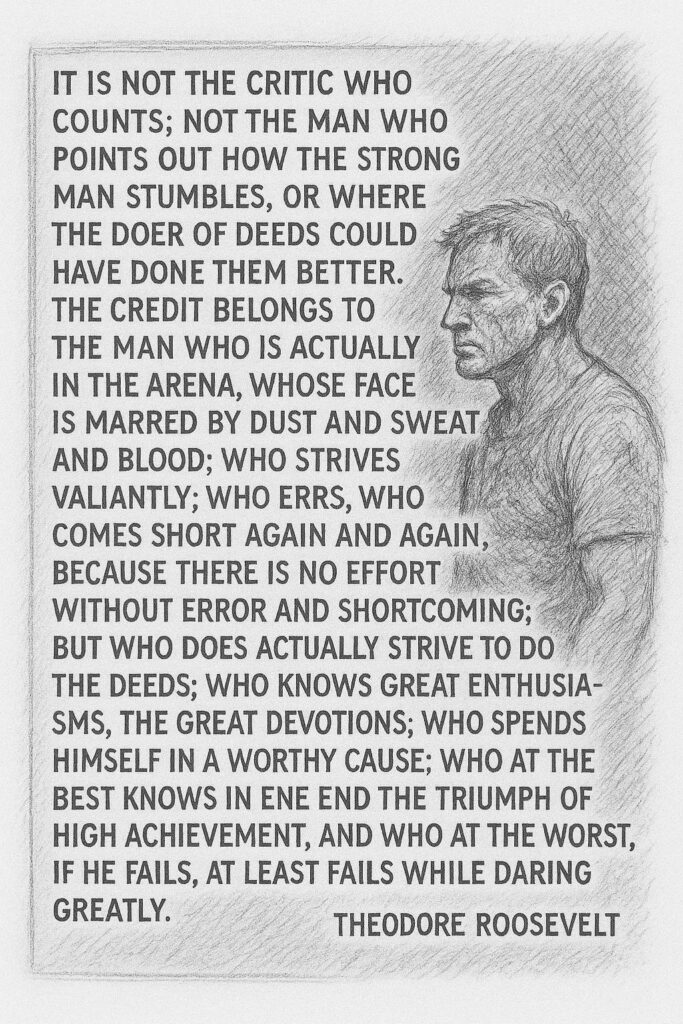
Agni Property
India Homes – Third Venture, High Growth & Hard Lessons
With two exits under my belt, I decided to tackle something bigger and more complex: PropTech in India.
I used my own capital to found Agni Property (A-G-N-I), which later became India Homes.
Early Stage & Venture Funding
Because of my track record, the company quickly attracted interest from venture capital and family offices.
We raised capital from:
- Helion Ventures
- Board members included Ashish Gupta (co-founder of Junglee, later acquired by Amazon) and R. Natarajan
- Foundation Capital (Silicon Valley)
- Led by Ashu Garg
- Later, after rebranding to India Homes, we raised investment from NEA (New Enterprise Associates).
Scale Under My Leadership
During my time as Founder & CEO, the business:
- Became the largest real estate transaction services company in India at the time
- Grew to:
- ->11 offices
- ->700 employees
- Reached around US$10 million in annual net income
- Achieved a valuation of around US$100 million
- Was frequently in the press as an innovative, tech-enabled player in a traditionally chaotic sector
Dilution & Exit
As is typical with high-growth, venture-backed companies, successive funding rounds meant that my personal stake diluted over time.
Eventually:
- The board decided to bring in a professional CEO.
- I exited the business operationally at a point when performance and prospects were still strong.
What Happened After I Left
What Happened After I Left
Roughly 18–24 months after my exit, the business ran into serious trouble:
- The Indian real estate sector slowed sharply.
- India Homes had around US$12 million in receivables due from some of the most prominent developers in the country.
- Those receivables became uncollectible or severely delayed.
- The company was unable to withstand the shock and was ultimately wound down.
A few negative media articles were published around the shutdown, as is typical. Because I was the founder, my name was still occasionally mentioned, even though I had no operational role by then.
How I View This Chapter
- During my tenure, the company was a significant success from a growth and operating perspective.
- The later collapse was driven by macro conditions, credit exposure and management decisions taken after my departure.
- Financially, my personal outcome was “okay” but not spectacular.
More importantly:
- My relationships with investors remained strong.
- Helion, Foundation Capital, and others have continued to advise me and support subsequent ventures.
- Several would happily serve as references and remain friends to this day.
- Proof points & references for this stage (available on request):
- Ashu Garg – Foundation Capital
- Ashish Gupta – Helion Ventures
- R. Natarajan – Helion Ventures
This was my third company and also my first experience of a business where the story had both a dramatic growth phase and a difficult end — even though that end came after my time.
Tripler
Early Voice Intelligence & the Birth of the Voice Thesis
One of the more unusual aspects of our PropTech work was the use of recorded voice conversations with customers.
Over time, I realised that:
Voice carried far more signal than text.
It wasn’t just what people said; it was how they said it — tone, pace, confidence, hesitation. That led to my next chapter.
Tripler: Experimental Voice Platform
I spent the next couple of years experimenting with voice as a medium of compute and built an experimental platform called Tripler, initially focused on real estate.
We:
- Ran pilots in the UK and the UAE
- Developed a concept called the MIU Score, where, from a short voice sample, we attempted to infer:
- -> Means
- -> Intent
- -> Urgency
This was early, imperfect and experimental – but it was also the seed of what I now believe is a generational shift: voice as the primary interface for AI.
Pre-Seed Investors in Tripler
Despite being experimental, Tripler attracted pre-seed capital from a remarkable group of investors and family offices who backed both the idea and my track record:
- Boohoo Group – multi-billion-dollar UK-listed company
- Private office of Rishi Khosla – Founder & CEO of OakNorth Bank
- Sir Ben Elliot – well-known UK business figure
- Harold Gitelman – private investor
- Paul Marson-Smith – Founder & CEO of Gresham Private Equity
- Jack Azout – Elyon Partners, New York
The Strategic Realisation
Through Tripler, I came to a conclusion that changed my trajectory:
- Using voice just for lead qualification in real estate was too narrow.
- The real opportunity was voice as the core interface for AI across all of business and computing.
We had a frank and transparent discussion with all pre-seed investors. Together, we agreed:
- We were “missing the forest for the trees” if we kept this only in PropTech.
- The bigger mission was to build a company around voice + AI as a new computing paradigm.
The investors agreed, and rolled their equity forward into what would become Sentium AI.
Sentium AI
Current Venture & Long-Term Mission
In the summer of 2025, we formally created Sentium AI, structured as a Delaware C-Corp headquartered in San Francisco.
Sentium AI exists to pursue a simple but ambitious idea:
Business people should have voice-first synthetic companions that think with them, not just tools they click.
Vision: Synthetic Business Consciousness
We are building voice companions for business that aim to function like:
- Thought partners
- Synthetic co-founders
- Always-on, always-learning assistants that understand:
- -> The context of your business
- -> Your preferences
- -> Your relationships
- -> Your “tribal knowledge”
The companions operate primarily by voice, and the underlying thesis is that:
- Compute has gone from mainframes → desktops → laptops → tablets → mobile
- The next stage is ambient compute, accessible anywhere, driven by natural speech
Sentium sits at that frontier: voice as the interface, AI as the orchestration layer, and business context as the substrate.
Structure & Footprint
- Incorporation: Delaware C-Corp
- Headquarters: San Francisco (Pacific Heights)
- Additional presence:
- -> Representative office in the UK
- -> Offshore / cost-efficient team members in Dubai and India
Several of the Tripler pre-seed investors are now pre-seed shareholders in Sentium AI, having rolled their interest forward.
My Personal Commitment
This is not just another startup for me. Sentium AI is the venture I intend to dedicate the remainder of my working life to.
- I believe the market size is enormous.
- The timing is right.
- The convergence of my experience, network, and this technological shift is unique.
- My ambition is to build Sentium AI into a profitable decacorn, but more importantly, into one of the defining companies of the voice-driven AI era.
References, Media, and Transparent Disclosures
Long-Standing Investor & Partner Relationships
Across all ventures, I have had external equity partners – venture funds and family offices – and I maintain constructive relationships with all of them, regardless of how each individual company ultimately performed.
Some of the key investors and partners across the journey include:
- Analjit Singh – Max Group / Chairman LEEU GROUP
- Sanjay Kapoor – Sona Comstar (now deceased; family / associates remain positive references)
- Helion Ventures – Ashish Gupta, R. Natarajan
- Foundation Capital – Ashu Garg
- NEA
- Boohoo Group
- Private office of Rishi Khosla (OakNorth Bank)
- Sir Ben Elliot
- Harold Gitelman
- Paul Marson-Smith (Gresham Private Equity)
- Jack Azout (Elyon Partners)
In addition, senior executives who have worked closely with me and would typically be happy to act as references include:
- Atul S. Nath – CEO, Candid Marketing
- Manish Mehta – Startup specialist based in Atlanta
- Bhaskar Bakshi – ex-IBM executive and CEO in one of my companies
- Ashwinder Singh – senior leader in Indian real estate
Media & Public Roles
Over the years, I have been fortunate to have a public profile in business and media, including:
- Television appearances on CNN and CNBC
- Features in the Wall Street Journal
- Contributions and features in Entrepreneur Magazine
- Hosting a real estate TV programme on India’s largest English-language channel
- Serving as:
- -> Chair of the YEO chapter in Asia
- -> Chairman of the Business and Entrepreneurs Association for the UK Conservative Party
- -> Member of various trade groups and associations
The overwhelming majority of coverage (dozens of pieces over two decades) has been positive.
Disputes, Complaints, and Litigation
From a business perspective:
- I currently have no disputes with any investors, partners or employees.
- There are no ongoing business lawsuits, regulatory investigations, or complaints related to any of my companies.
- I have no history of governance or compliance violations in any jurisdiction I’ve operated in.
In a 25-year entrepreneurial career across four ventures and several countries, that is something I take seriously and try hard to maintain.
A Note on India Homes Coverage
As mentioned earlier, India Homes ran into serious trouble two years after my operational exit, due to a combination of macro slowdown and uncollected receivables from major developers.
A couple of negative articles were written in that context. They relate to the company’s eventual closure rather than any misconduct. During my tenure, the business grew strongly and operated profitably; afterwards, it struggled under very different conditions and leadership.
The investors from that company remain on good terms with me and continue to be involved in my later ventures.
Personal Family Dispute (India)
In the interests of full transparency:
There is one purely personal dispute unrelated to any business matter.
- It is a family inheritance dispute between myself and my brother’s family over ancestral property in New Delhi.
- I left India in 2015 and am no longer resident or a citizen. Several years after I left, this issue escalated.
- As part of this dispute, certain frivolous court and police complaints were filed in India and two defamatory blog posts were published online as pressure tactics.
- These posts made serious but entirely false allegations. They were challenged legally through Mishcon de Reya, a leading UK law firm, whose filings robustly rebutted the claims.
Key points:
- This matter is private, family-related, and has no connection to any of my businesses or investors.
- It is the only area where negative online content exists about me, and it arises solely from this personal dispute.
- It has not affected any of my business relationships or operations.
I include it here not because it is material to my business record, but so that if you do come across those blog posts during diligence, you understand the context and the legal response that followed. The legal correspondence is available for review on request.
Summary
Equity Partners, Pattern & Why This Matters
Vision: Synthetic Business Consciousness
Across four companies and now a fifth major venture (Sentium AI), the pattern is consistent:
- I have built companies from zero multiple times.
- I have raised capital from:
- -> 4+ professional venture funds
- -> 7+ private family offices and HNW investors
- -> At various stages, a London Stock Exchange–listed group and other institutional players
- I have:
- -> Returned capital
- -> Created exits
- -> Managed difficult situations
- -> Maintained constructive relationships with investors and colleagues throughout
The key things an investor typically wants to know are:
- 1. Does this person have real operating experience?
- -> Yes – four companies, thousands of employees, multiple sectors (marketing, hospitality, PropTech, voice/AI).
- 2. Have they raised and returned capital before?
- -> Yes – multiple times, with documented exits and satisfied investors.
- 3. Do their former investors and senior colleagues still speak to them?
- -> Yes – many are still shareholders, advisors, or friends, and are willing to act as references.
- 4. Is there any hidden baggage?
- -> No business disputes, no regulatory or governance issues.
- -> One personal family dispute in India that I have fully disclosed above.
- 5. Is this someone who is in it for the long haul?
- -> Yes – Sentium AI is where I intend to spend the remainder of my working career.
If you are considering investing in, partnering with, or working for Sentium AI and would like to speak to any of the people mentioned here, I will gladly facilitate appropriate introductions under mutual NDA where necessary.
At the end of the day, all that matters is pattern recognition.
My pattern, over 25+ years, is straightforward:
- Build
- Scale
- Treat people fairly
- Own the outcomes, good and bad
- Keep relationships intact
That is the spirit in which this section is written.